Compostthee
release minirals, inhibit pathogens, improve soil structure
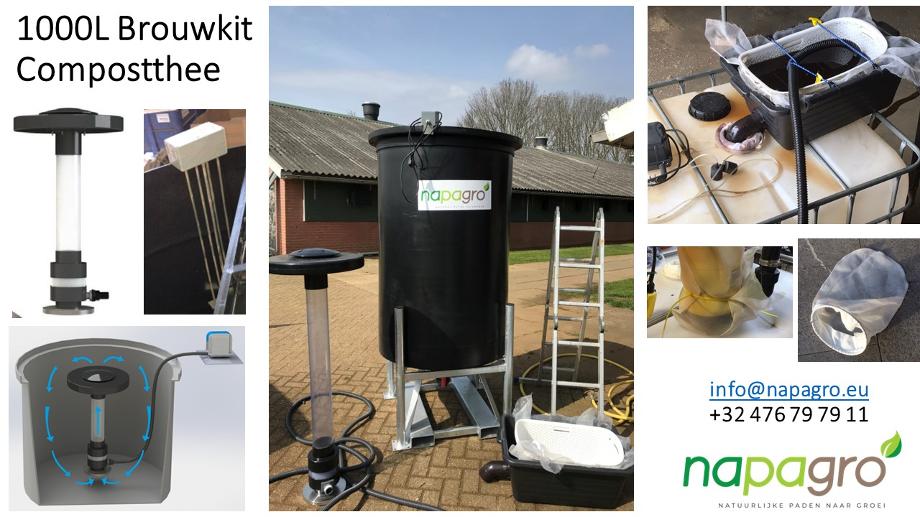
Compostthee is een extract van de in gehumificeerde compost aanwezige microbiologie. Het wordt gebruikt om het microbiologisch leven van planten, zowel op het blad als rondom de wortels te ondersteunen.
Vaak wordt compostthee 'gebrouwen' door compost in een vat met water te plaatsen en dit te beluchten. Dit proces duurt dan ongeveer 24-48 uur. Napagro gebruikt het systeem van Oxydent dat de
microbiologie "extraheert"
in plaats van te "brouwen". Hierdoor wordt al na
8 uur een goed extract
bekomen, waarbij alle mineralen en de biologie in suspensie komen, klaar om toegepast te worden.
Worm compost usually forms the basis of our recipe, because of the interesting substances in the 'worm poo'. In addition, a mix of food for the micro life, so that it can multiply quickly in the water of 20-25 ° C. At the request of the customer, the biology can be adjusted to more fungal dominance.
Functions
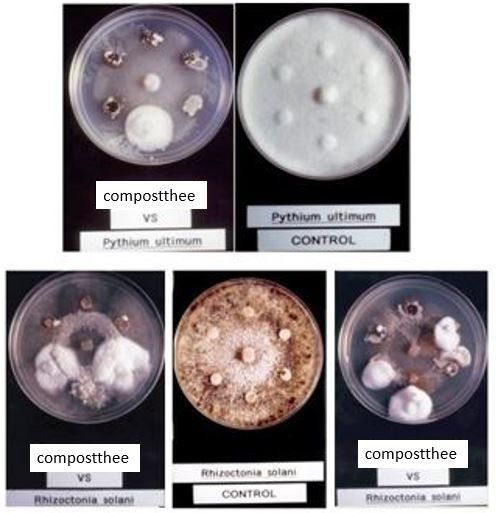
- Compost tea contributes to better disease resistance, both on the leaf and in the soil, by creating more competition.
- More diverse biology will also help to release minerals and trace elements and to make organic precast building blocks that the plant uses to e.g. to create immune proteins.
- Active soil biology also ensures a better soil structure: by separating adhesives that glue small soil particles together to form larger particles, resulting in a coarser structure. This allows air and water to circulate better.
Application in all crops: 50 to 200L per ha, with the field sprayer or via drip line.
In addition, the effect of 4 x 150L compost tea in durum wheat, sprayed in the period April, May and June. The soil is clearly smoother and crumbly.
We see the same effect in people who use compost tea via drip line in open-ground strawberry cultivation.
We saw maize twice treated with compost tea in the hot summer of 2020 after the heat, while the untreated strips did not recover.